On a Sabbath, while he was going through the grainfields, his disciples plucked and ate some heads of grain, rubbing them in their hands. But some of the Pharisees said, “Why are you doing what is not lawful to do on the Sabbath?” And Jesus answered them, “Have you not read what David did when he was hungry, he and those who were with him: how he entered the house of God and took and ate the bread of the Presence, which is not lawful for any but the priests to eat, and also gave it to those with him?” And he said to them, “The Son of Man is Lord of the Sabbath.” (Luke 6:1-5)
The Rub
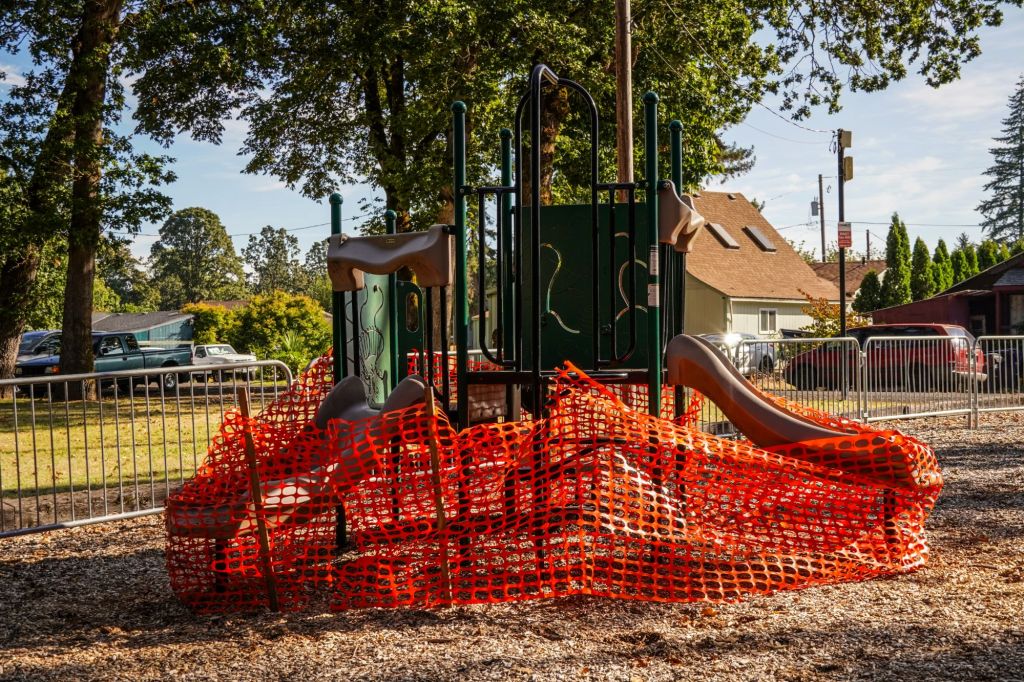
The past few weeks have been a bit contentious for many in my little town. The city manager and mayor had convinced most of the city council members that it was necessary to tack an additional fee onto our monthly utility expenses in order to maintain our public parks and library and still further their long term agenda for the city. What made the move particularly divisive, though, is that the citizens did not have an opportunity to vote on this additional fee. Believing that this action was not necessary or appropriate, one of our previous city managers filed for a referendum so that the citizens could vote on this new fee. The current city manager took offense to this questioning of her authority and unilaterally closed our parks. The result of which is now metal barricades and warning signs at the perimeters of our parks, bright orange plastic wrapped around playground equipment, the tying up of swing sets and even the removal of all trash cans,… just to show us who is really in charge.
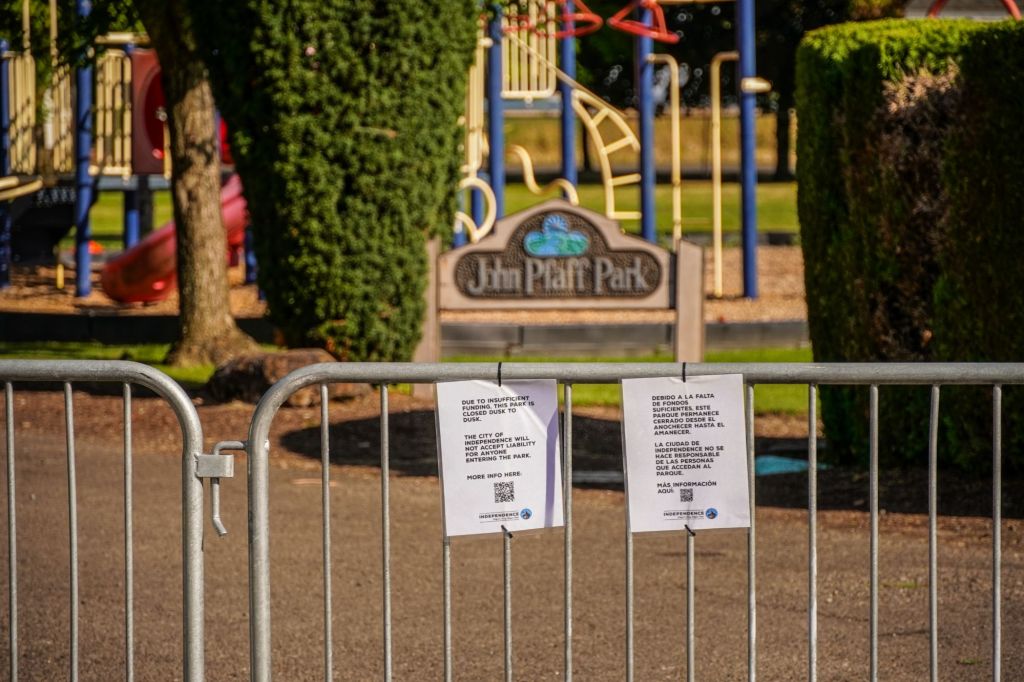
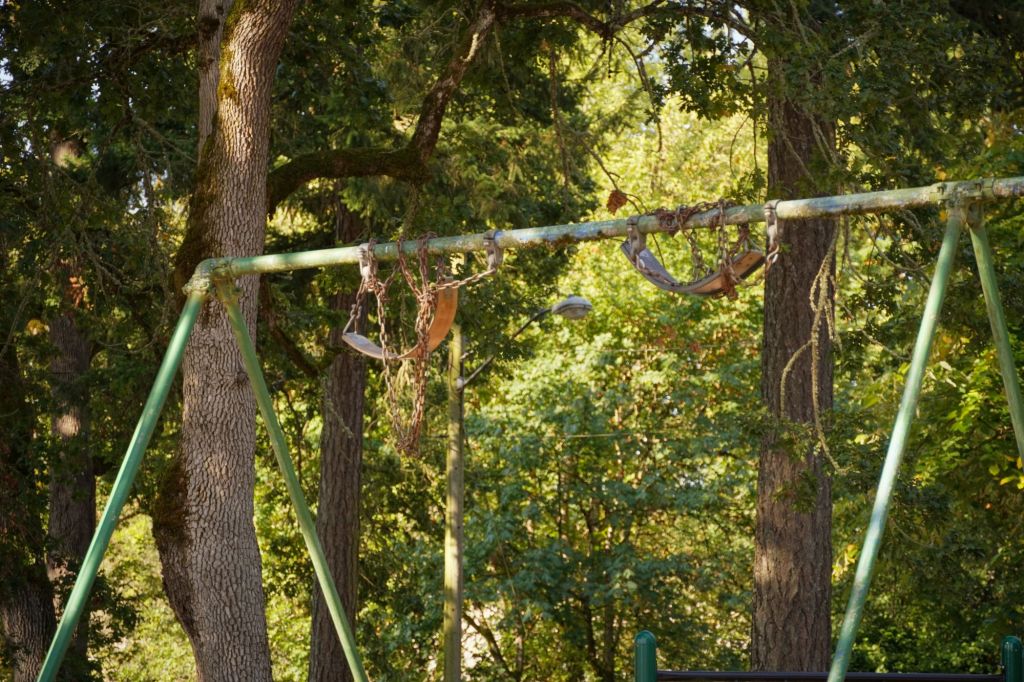
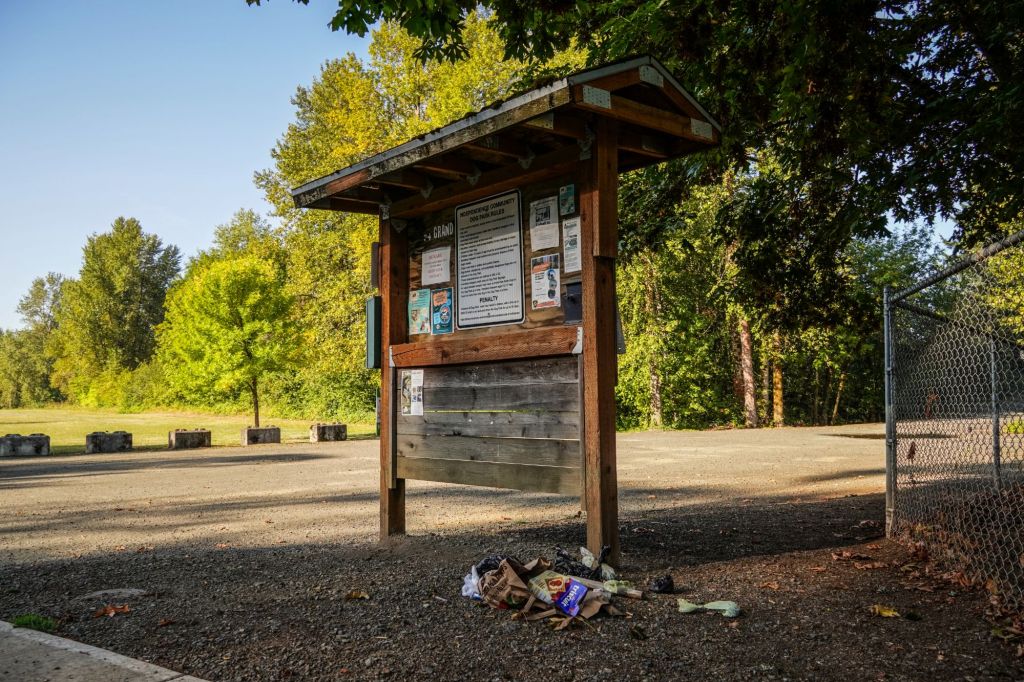
Needless to say this maneuver went over like a led balloon. Stuck between a rock and a hard place, one community park group gave into the pressure and forked over $30,000 dollars so that the most visible and active park in the heart of town could be opened back up for a little while.
There was no negotiations to be had for the remaining parks though, leaving residence to either comply with the manipulative mandates or push back on social media or with non-compliance. And, as anyone would expect, they did just that; questioning the city governments narrative at every point.
I must confess I got pretty wrapped up in the whole thing myself. Commenting on the mayors posts, and even going to a town hall meeting to make a formal statement of concern. And yet, all the while, knowing that my pleas were probably having little effect.
Why did I feel so compelled to help right this injustice? Did these city leaders really not know how hurtful this action was to the residents who rely daily upon their parks and libraries, or did they know and were just using them as political pawns to further their own agenda? Whatever the case was answers were not forth coming, and every effort to effect a better outcome was being stonewalled, either by silence or administrative gaslighting.
On two occasions I heard the mayor comment that she thought the silver lining in this whole debacle is that it was causing the community to come together and become more engaged, only to then ignore or resist any efforts at substantive communication or resolves. In my own efforts to try and connect with people on the official parks board I was completely ignored. That too has been the experience of our own formal local media Trammart News, and many others who I have spoken with.
Due to such frustration and with little hope of a better solution, at least in the short term, citizens have felt compelled to take matters into their own hands. At most of the closed parks, gates to keep people out have been breached, protest signs posted, and physical barriers removed from playground equipment.
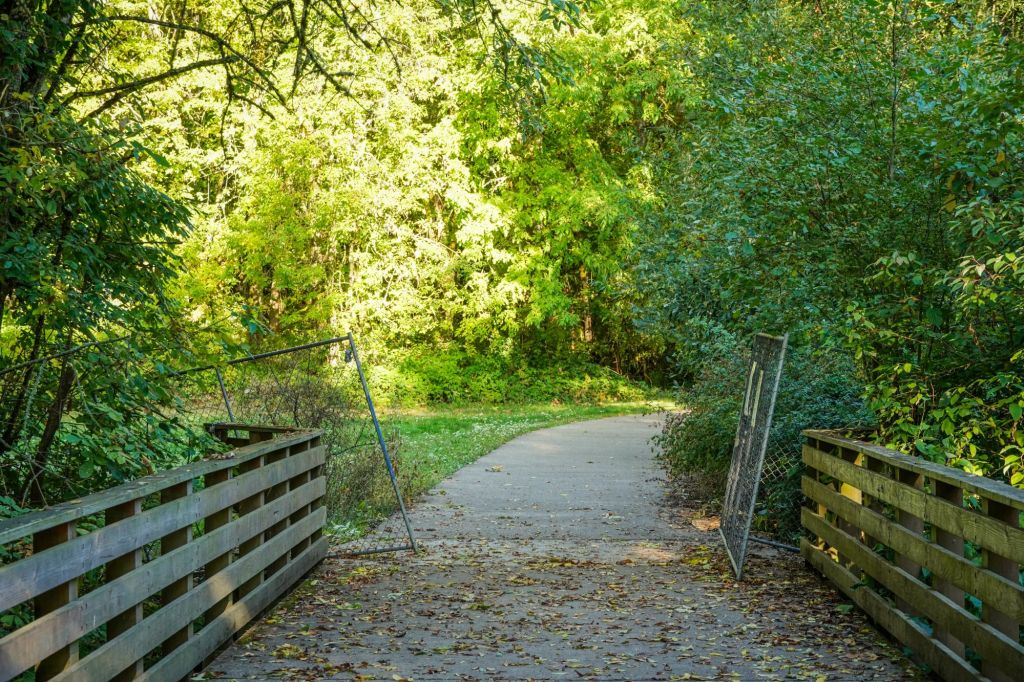
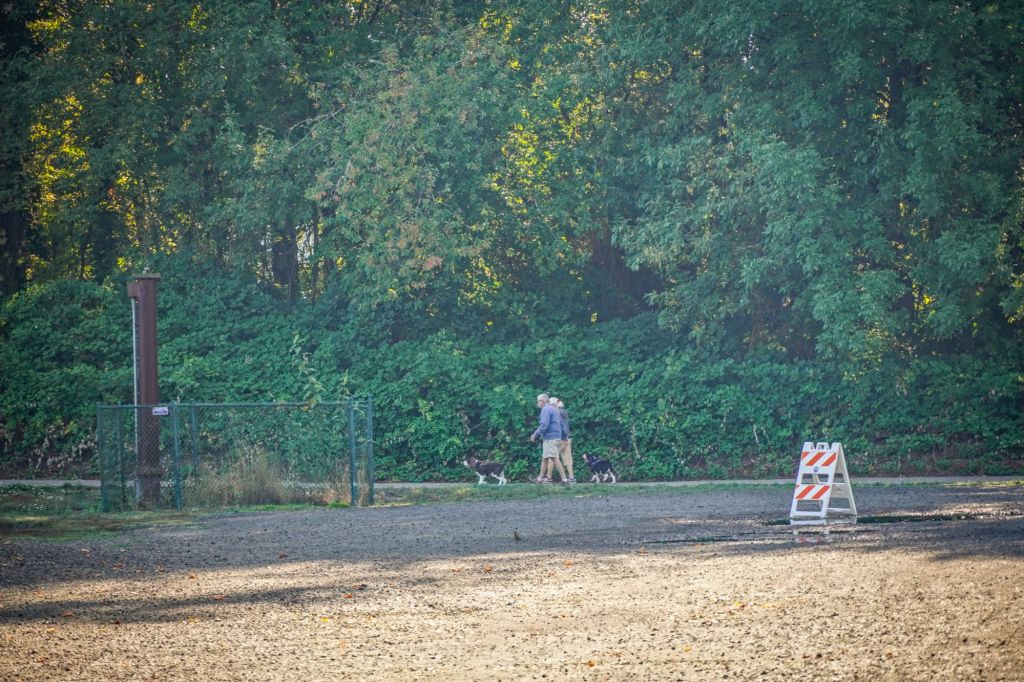
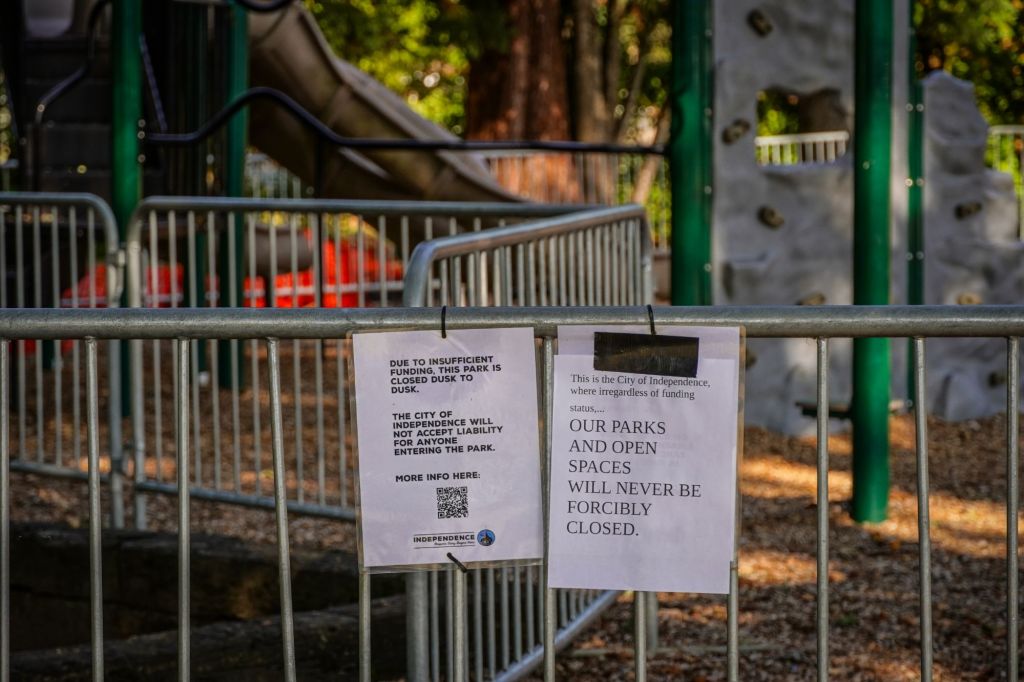
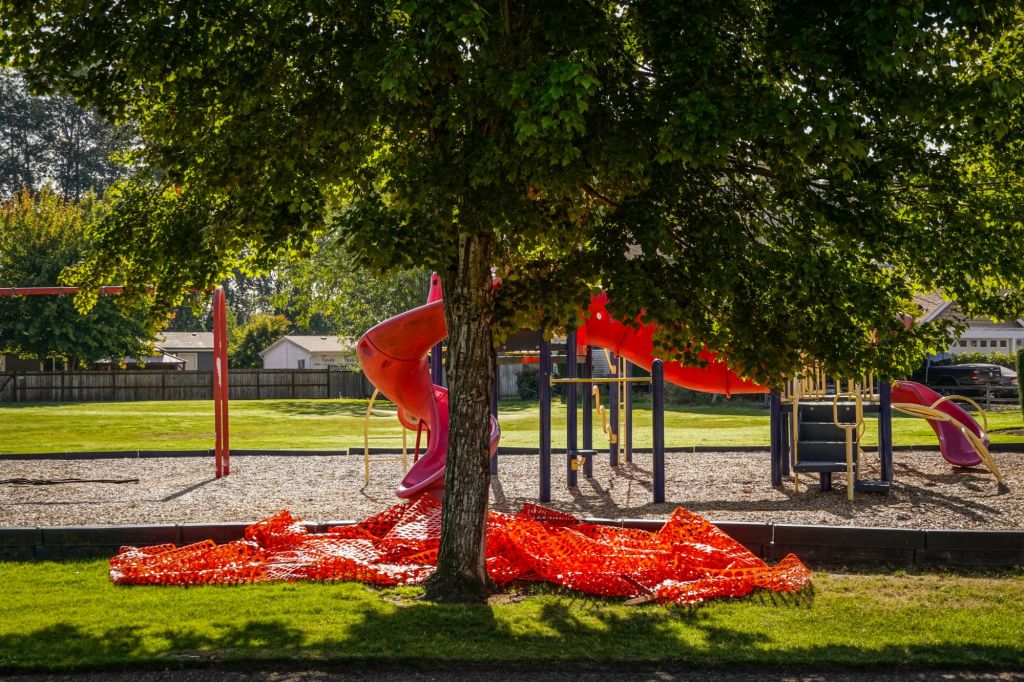
One concerned citizen, named John, decided to take it upon himself to oversee the safety and cleanliness of his own neighboring park. He set up his own trash can there and walks through regularly to inspect for any issues of concern. Here is link to a video of John beautifully exercising both his civil liberties and responsibilities.
https://www.facebook.com/share/v/1VLzyEzuXu/
John kind of reminds me of another beautiful outlaw who walked this planet some 2,000 years ago. Only that guy not only stood against his oppressors, he actually went so far as to lay his life down for them! I won’t speak for John but such reckless compassion was not my first thought in dealing with the kind of people who currently run our city,… rather something more along the lines of hitching up my trailer and hauling off some fences panels to the place from whence they came.
In all seriousness, though, I really do feel sorry for people who need a salary that’s more than double the median family income of our community and a kind of ambition that makes you callous to everything beyond your own agenda, in order to feel successful Such people have deluded themselves into thinking that they are the important movers and shakers in our community, when really they’re just the Pharisees of our age, the legally minded ruling class who are blind to any kingdom other than their own.
Seeing The Bigger Picture
There is another kingdom though, one that a Man from Galilee inaugurated some 2,000 years ago. But it’s not the kind of kingdom that most people pay much attention to. Unlike the secular, material kingdoms of this world Jesus’s Kingdom is not established through conventional governance and forced rule. There are no categorical buckets, that segment life into separate parts, to conveniently abdicate responsibilities and escape blame.
In God’s Kingdom there is concern about physical governance but not as an end in itself but as a test of our character. Will we make compromises in our moral integrity in order to achieve those material benefits, and personal gain or will we faithfully steward that which we have been given, trusting that God will provide when we do our part.
Of course the harder question we always have to navigate is, what is our part? Is it enough to virtue signal and say that we are for the compassionate things and against the oppressive things? If we are honest with ourselves I think most would definitely agree that action and sacrifice is part of the equation. The question then is, which action and how much sacrifice?
Naturally we all have to answer these questions for ourselves. Only we know what is currently on our plate and what God has put on our heart to do.
There are some pretty helpful principles that Jesus laid out for his followers though, principles which have guided me well when I have heeded them.
-Only begin that which you have the time and resources to complete. (See Luke 14:28-30)
-When you do begin to act on something, do it to the best of your ability and not for the sake of other’s praise. (See Matthew 6:1-4)
Whenever I have compromised on these principles I have regretted it, suffered the natural consequences and resulting conflicts.
When I have followed these free willed principles though, I have experienced much joy, and peace and satisfaction.
Stepping Out Of Our Comfort Zone
The fact that all cities and larger communities have parks and libraries and museums and other open spaces for people to explore and recreate is a fact of human civilization. We need such dwelling places because within the confines of our own private properties lines we are not able to have a shared experience, and without a shared experience we have no identity other than our own ego, with its multitude of limiting confines.
Without shared experiences in community spaces life is not only much more lonely, it is far less meaningful, and lacking in existential purpose. God designed us as relational creatures not just for the benefits of a “division of labor”, and in making our lives easier, or accomplishing more stuff. God’s intention for humanity is much more profound and glorious! It is the gathering together of people of all kinds to each contribute something unique and special, and of benefit to all. (See 1 Corinthians 12)
But to experience true community there has to be a belief in something that’s greater than yourself, and an investment in things that don’t necessarily directly benefit you. Saying “yes” to a $20 fee that you’ve been blackmailed into may be what you consider to be the best community-centric response. And if that is your genuine conviction, I have no shade to cast your way. At least I know you care!
I think, for those of us who are more awakened to the larger systemic problem of class warfare and elitist oppression, this moment requires a little bit more than shutting-up and doing what we’re told to do. I’m still praying about what those things would be, but like my good neighbor, John, I will will not be sitting in the corner wishing for things to be differently than they are. I will respond in charity to the needs of the least of these in our community, and I shall not be dissuaded by any of the antics of the posers who pretend to be our city leaders. They are free to build their own kingdom but even the “gates of Hell” will not restrain the infinitely greater Kingdom of God.
Together we can turn our fences into welcoming dwelling places, where we teach our children how to steward what they are given, rather than rule over it.